IT Compliance Checklist: What Charleston Law Firms Actually Need
 Adam Quan is the President of Charleston IT Solutions, an award-winning provider of managed IT services to over 200 businesses and nonprofits in the Southeast.

Navigating the complex landscape of technology and regulations can be a daunting challenge for any legal practice. Especially in Charleston, SC, where client data sensitivity is paramount, understanding and implementing robust IT compliance for law firms is not just good practice; it’s a legal and ethical imperative. This comprehensive guide will break down the essential IT compliance requirements for law firms in Charleston, ensuring your practice protects sensitive client information and avoids costly penalties.
Key Insights
Strict Confidentiality is Mandated – Law firms handle highly sensitive client information, making robust data security and confidentiality protocols non-negotiable. Protecting this data is central to ethical obligations and legal requirements.
Regulatory Compliance Extends Beyond HIPAA – While medical and financial firms have specific acts like HIPAA and GLBA, law firms face a broader spectrum of rules including ABA Model Rules, state bar associations, and potentially industry-specific regulations if they specialize in healthcare or finance.
Proactive Cybersecurity is Essential – Law firms are prime targets for cyberattacks due to the valuable nature of their data. Implementing preventative measures like encryption, multi-factor authentication, and regular security audits is crucial for protection.
Disaster Recovery Plans are Critical – The ability to quickly restore operations and data after a system failure, natural disaster, or cyberattack is vital for business continuity and client trust. A robust disaster recovery planning strategy ensures your firm can withstand disruptions.
Managed IT Services Offer Specialized Expertise – Many Charleston law firms benefit from partnering with a specialized managed IT provider who understands legal industry compliance nuances. This external expertise helps ensure continuous adherence to evolving standards.
Understanding the Foundation of Legal IT Compliance
Legal professionals operate under strict ethical guidelines, primarily focused on client confidentiality and attorney-client privilege. These ethical obligations directly translate into stringent IT compliance requirements, particularly concerning the storage, transmission, and access of sensitive data. In essence, your technology infrastructure must uphold the same level of confidentiality and integrity as your professional conduct.
For example, the American Bar Association (ABA) Model Rules of Professional Conduct, particularly Rule 1.6 on Confidentiality of Information, dictates how lawyers must protect client data. While not a federal law, these rules often form the basis for state bar association regulations, including those in South Carolina. Therefore, understanding these foundational principles is the first step toward building a compliant IT environment for your Charleston law firm.

Key Regulatory Bodies and Guidelines for Law Firms
While there isn’t a single “HIPAA for law firms” federal law, legal practices must adhere to a patchwork of regulations depending on their client base and practice areas. Therefore, a multi-faceted approach to compliance is necessary.
-
American Bar Association (ABA) Model Rules: These rules, adopted in varying degrees by state bar associations, provide ethical guidance. Rule 1.6 on confidentiality and Rule 1.1 on competence (which includes technological competence) are particularly relevant to IT security. Consequently, IT support for law firm must align with these guidelines.
-
State Bar Associations: The South Carolina Bar Association may issue specific ethics opinions or guidelines regarding technology use and data security. Therefore, your firm must stay informed about local interpretations of ethical rules, ensuring proper legal IT services in Charleston are employed.
-
HIPAA (Health Insurance Portability and Accountability Act): If your law firm handles Protected Health Information (PHI) for healthcare clients, you must be HIPAA compliant. This includes strict rules for data encryption, access controls, and breach notification. This is especially true for firms dealing with medical malpractice or personal injury cases.
-
GLBA (Gramm-Leach-Bliley Act): Financial law firms must comply with GLBA, which mandates how financial institutions protect nonpublic personal information of customers. This act requires safeguards for customer data, including administrative, technical, and physical measures.
-
PCI DSS (Payment Card Industry Data Security Standard): Any firm processing credit card payments directly must adhere to PCI DSS standards. Although not a legal mandate, it’s an industry requirement to protect cardholder data, which can lead to significant penalties for non-compliance.
The Essential IT Compliance Checklist for Charleston Law Firms
To help your firm navigate these requirements, here is a practical checklist of critical IT compliance measures. Implementing these measures will bolster your security posture and demonstrate due diligence to regulatory bodies and clients alike. For this reason, many firms seek dedicated dedicated IT support.
1. Robust Data Encryption
Client data, both in transit and at rest, must be encrypted. This means using strong encryption protocols for emails containing sensitive information, securing cloud storage, and encrypting hard drives on all devices. Encryption is a fundamental safeguard against unauthorized access, even if a device is lost or stolen. When choosing a solution, prioritize options that meet industry standards for data protection.
2. Access Controls and User Authentication
Not everyone needs access to all files. Therefore, implement strict access controls based on the principle of least privilege, meaning users only have access to the data necessary for their role. Furthermore, strong user authentication, including multi-factor authentication (MFA), should be mandatory for all systems accessing client data. This adds a crucial layer of security beyond just passwords.
3. Comprehensive Cybersecurity Measures
Law firms are high-value targets for cybercriminals. Protecting your firm requires a multi-layered cybersecurity strategy. This includes:
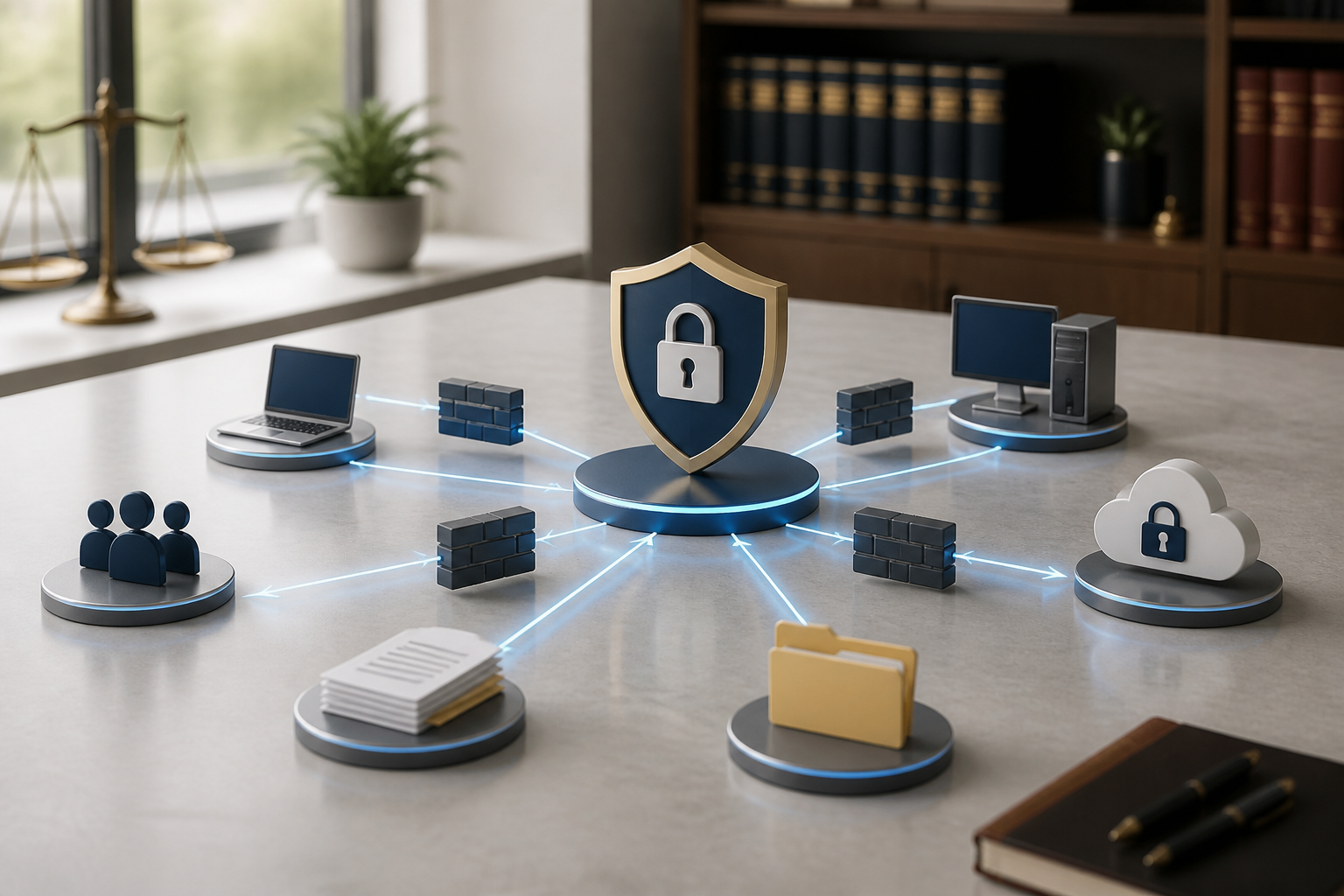
– Advanced Threat Protection: Utilize firewalls, antivirus software, and intrusion detection systems to prevent malware and unauthorized access.
– Email Security: Implement spam filters, phishing protection, and secure email gateways to defend against email-borne threats.
– Regular Security Audits and Penetration Testing: Periodically assess your systems for vulnerabilities and test your defenses. Cybersecurity best practices in Charleston emphasize continuous monitoring and improvement.
4. Data Backup and Disaster Recovery
Unexpected data loss can be catastrophic for a law firm. Consequently, a comprehensive backup and disaster recovery plan is essential. Regular, automated backups of all critical data to secure, offsite locations are necessary. Furthermore, a clear recovery strategy ensures your firm can quickly restore operations and data after a system failure, cyberattack, or natural disaster. This safeguards business continuity and client trust, particularly in a coastal city like Charleston prone to weather events.
5. Employee Training and Awareness
The human element remains the weakest link in cybersecurity. Regular, mandatory cybersecurity awareness training for all employees is crucial. This training should cover identifying phishing attempts, safe browsing habits, password best practices, and understanding the firm’s data security policies. Educated employees are your first line of defense against many common cyber threats, which is why IT security tips for small businesses in Charleston, SC often emphasize training.
Cloud Services and Compliance: What You Need to Know
Many law firms in Charleston are leveraging cloud solutions for small businesses to enhance collaboration and efficiency. However, using cloud services introduces additional compliance considerations. You must ensure that any cloud provider you engage is also compliant with the relevant regulations and ethical guidelines. Therefore, due diligence is critical.
Vendor Due Diligence and Agreements
Before entrusting client data to a cloud provider, conduct thorough due diligence. Scrutinize their security practices, data center locations, and certifications. Moreover, ensure your contract includes a Business Associate Agreement (BAA) if handling PHI (for HIPAA compliance) or robust data processing agreements outlining their responsibilities for data protection. These agreements are crucial for outlining liability and ensuring shared responsibility.
Data Residency and Jurisdiction
Understand where your data will be stored and the legal jurisdiction that applies. For instance, storing data in foreign countries can introduce complex legal and compliance challenges. Opt for providers that offer data residency options within the United States, or even better, within a specific region like South Carolina, if that aligns with your firm’s policies or regulatory requirements.
The Role of Managed IT Services in Legal Compliance
Achieving and maintaining IT compliance is an ongoing process that requires specialized expertise. Many Charleston law firms find that partnering with a best managed IT services company provides significant advantages. These providers offer the necessary technical knowledge, continuous monitoring, and proactive management to ensure your firm remains compliant with evolving regulations. They can also assist with cybersecurity strategy development.
A reputable managed IT partner will understand the unique compliance challenges faced by law firms. They can implement robust security measures, manage backups, conduct regular audits, and provide ongoing support and training. This allows your legal team to focus on their core competencies, knowing their IT infrastructure is secure and compliant. Furthermore, proactive monitoring helps identify potential issues before they become compliance violations.

Choosing the Right Partner for Your Charleston Law Firm
When selecting a managed IT provider for your Charleston law firm, consider their experience with legal sector compliance. Ask about their understanding of ABA rules, HIPAA, GLBA, and state-specific regulations. A local provider, like one offering local IT support Charleston SC, can offer more responsive service and a better understanding of the regional business and regulatory environment. Finally, ensure they offer comprehensive IT security services.
Consequences of Non-Compliance
The penalties for IT non-compliance in the legal sector can be severe. Consequently, avoiding these issues should be a top priority. They extend beyond financial fines to include reputational damage, loss of client trust, and even disbarment in extreme cases. Therefore, maintaining compliance is critical for the long-term viability of your practice.
Financial Penalties and Legal Ramifications
Violations of regulations like HIPAA or GLBA can result in substantial fines, sometimes reaching millions of dollars. Additionally, data breaches can lead to costly litigation from affected clients. Furthermore, regulatory bodies may impose corrective action plans that require significant financial investment and operational changes. These financial burdens can be devastating for a small or mid-sized law firm. For instance, an article from the American Bar Association details the importance of cybersecurity for legal professionals: ABA Cybersecurity for Legal Professionals.
Reputational Damage and Loss of Client Trust
In the legal profession, trust and reputation are paramount. A data breach or compliance failure can severely damage your firm’s standing, leading to a loss of existing clients and difficulty attracting new ones. Rebuilding trust after such an incident is a long and arduous process, sometimes impossible. Clients expect their lawyers to protect their sensitive information diligently, and any lapse can be unforgivable.
Conclusion
For law firms in Charleston, SC, IT compliance is a multifaceted responsibility that intertwines ethical obligations with legal requirements. Implementing a robust IT compliance checklist, from data encryption and access controls to comprehensive cybersecurity and employee training, is crucial. Moreover, selecting the right managed IT partner with expertise in the legal sector can provide invaluable support in navigating this complex landscape. By prioritizing IT compliance, your firm not only protects sensitive client data but also safeguards its reputation, ensures business continuity, and avoids significant legal and financial repercussions. Stay ahead of the curve and ensure your firm’s technology infrastructure is as sound as your legal counsel.
Is Your Charleston Law Firm Fully Compliant?
Don’t leave your firm’s data security and compliance to chance. Our team specializes in providing tailored IT solutions for law firms in Charleston, SC. We understand the unique challenges you face and can help you implement a comprehensive compliance strategy that meets all ethical and regulatory requirements.
Frequently Asked Questions
What are the primary IT compliance regulations affecting law firms in Charleston, SC?
Law firms in Charleston must primarily adhere to ethical rules like the ABA Model Rules of Professional Conduct (adopted by the SC Bar), which mandate client confidentiality and technological competence. Additionally, if they handle specific types of data, they may need to comply with federal laws such as HIPAA for Protected Health Information (PHI) or GLBA for financial data. PCI DSS applies if they process credit card payments directly. Thus, a multi-faceted approach is generally required.
How often should a law firm conduct IT security audits for compliance?
It is recommended that law firms conduct IT security audits at least annually to ensure ongoing compliance with evolving regulations and best practices. However, more frequent reviews may be necessary after significant changes to their IT infrastructure, adoption of new technologies, or in response to a security incident. Regular audits help identify vulnerabilities proactively and maintain a strong security posture. Many firms also benefit from continuous monitoring provided by managed IT services support.
Is cloud storage permissible for sensitive client data in a law firm?
Yes, cloud storage is permissible for sensitive client data, provided the chosen cloud provider meets stringent security and compliance requirements. Therefore, law firms must conduct thorough due diligence on any cloud vendor, ensuring they have robust encryption, access controls, data backup, and business associate agreements (BAAs) if applicable. The ABA and various state bar associations have issued guidance on the ethical use of cloud computing, emphasizing due care in vendor selection. Secure remote IT support for the legal industry also relies heavily on secure cloud solutions.
What is the minimum requirement for employee cybersecurity training in a law firm?
While there isn’t a universally mandated minimum, best practice and ethical obligations suggest that all law firm employees should receive regular, comprehensive cybersecurity training. This training should occur at least annually, with supplemental sessions when new threats emerge or policies change. Topics should include phishing awareness, password hygiene, data handling protocols, and incident reporting procedures. Training helps mitigate the risk of human error, a leading cause of data breaches. This is a key component of IT security.
Why is multi-factor authentication (MFA) so important for legal IT compliance?
Multi-factor authentication (MFA) is crucial because it significantly enhances security by requiring users to provide two or more verification factors to gain access to an account or system. Even if a password is compromised, an attacker still needs the second factor (e.g., a code from a mobile app or a biometric scan) to gain access. This extra layer of security is vital for protecting highly sensitive client data from unauthorized access and is increasingly mandated or strongly recommended by various compliance frameworks and best practices for IT support.